Spray painting produces a factory-quality finish on furniture and fittings. Brush painting produces a textured surface with visible brush marks. On kitchen cabinets, wardrobes, staircases and radiators, the difference is significant and permanent. This post explains where each method wins and why the distinction matters for Yorkshire homeowners choosing how to refinish interior surfaces.
- Spray painting produces a smooth, even finish with no brush marks on furniture and fittings
- Brush painting is appropriate for walls and ceilings, not for kitchen cabinets or joinery
- Professionally sprayed lacquer is harder and more washable than brush-applied satinwood or eggshell
- The difference in finish quality is visible to the naked eye and noticeable to the touch
- Spray-painted cabinets last 10 years or more; brush-painted cabinets typically show wear within 3 to 5 years
The Key Difference Between Spray and Brush Painting
Spray painting atomises paint into fine droplets that settle as a perfectly level film on the surface. Brush painting deposits paint in directional strokes that always leave some texture in the finished surface. On walls, this texture is normal and not a problem. On flat kitchen cabinet doors or wardrobe panels, it is visible in raking light and gives the surface a hand-painted appearance rather than a factory-painted one.
This is not a matter of skill level or brush quality. The finest brush in the hands of the most experienced decorator leaves brush marks on a flat painted surface. This is a property of how brush painting works, not a sign of poor workmanship. On the right surfaces (walls, ceilings), it is completely acceptable. On surfaces where a smooth, flat finish is required (kitchen doors, wardrobe panels, radiators), it falls short of what spray painting achieves.
The paint systems also differ. Spray painting uses professional-grade lacquers that cure through a chemical process to a hard, washable film. Brush painting typically uses decorating paints that dry rather than cure, producing a softer surface film that is less resistant to daily contact, cleaning and moisture.
Where Spray Painting Wins
Spray painting is the correct method for any interior surface that requires a smooth, hard finish. The surfaces where the advantage is clearest are those most commonly refinished by Yorkshire homeowners.
Kitchen Cabinet Doors and Drawer Fronts
Kitchen cabinet doors are the classic example where spray painting is categorically better. They are flat, smooth surfaces viewed close up every day in good light. Any brush texture is immediately visible. They are also high-use surfaces that need to be wiped regularly: the harder, more washable surface provided by professional lacquer is a practical advantage as well as a visual one. A brush-painted kitchen door starts showing wear at edges and around handles within 2 to 3 years. A spray-painted kitchen door in the same household, with the same cleaning habits, should still look right at 10 years.
Fitted Wardrobes
Wardrobe door panels are large flat surfaces where any surface texture is obvious. Spray painting produces the consistent, flat appearance that makes a fitted wardrobe look like a quality product. Brush painting on wardrobe doors looks like someone has painted over a fitted wardrobe. The distinction is noticeable immediately.
Staircase Spindles and Banisters
On complex shapes like turned spindles, spray painting is not just better, it is the only practical method for achieving consistent coverage. A brush cannot reach the inner faces and rear sections of a turned spindle consistently. Spray painting wraps every face of the spindle in an even coat. Drips on the lower sections of vertical spindles, a characteristic problem with brush painting staircases, do not occur with spray equipment used correctly.
Radiators
Radiators need both a smooth finish (they are visible fittings in living spaces) and a heat-resistant paint. Spray painting with the correct heat-resistant formulation achieves both. Brush painting radiators with standard radiator paint is possible but produces a surface that yellows faster and shows brush texture in the flat panel sections.
Alcove Units and Bookshelves
Alcove shelving and built-in units benefit from spray painting for the same reasons as kitchen cabinets: flat surfaces, close viewing distance, and the desire for a clean, considered look rather than a home-decorated appearance.
Where Brush Painting Is Appropriate
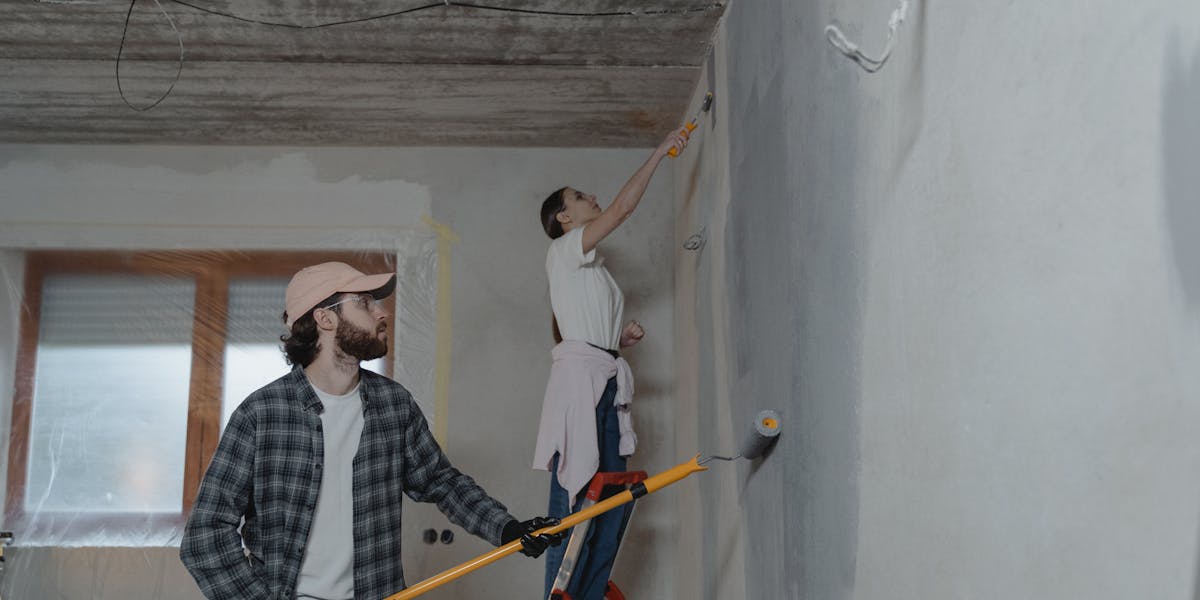
Brush and roller painting is the right approach for walls and ceilings. These are large surfaces where a degree of texture is normal, and where the economics and logistics of spray painting in a domestic setting do not make sense. Spraying walls and ceilings in an occupied home requires extensive masking of every fitting, floor and opening, which is time-consuming and costly relative to the benefit. For walls and ceilings, a roller and brush in the hands of a skilled decorator is the right method.
External render, masonry and large external timber surfaces are also often painted by brush and roller where spray equipment is not practical or appropriate. There are exceptions: large external spray painting jobs on render or cladding make sense for spray equipment where the scale justifies the setup. But for a standard bedroom or living room wall, brush and roller is correct.
Durability Comparison
The durability difference between professionally sprayed lacquer and brush-applied decorating paint is significant on high-contact surfaces.
Professional water-based lacquers used in kitchen and joinery spraying cure to a surface hardness measured in the region of 2H pencil hardness or higher. Standard brush-applied satinwood or eggshell cures to a much softer surface. In practical terms, this means the sprayed surface resists scratching, chipping and wear at edges and around handles for significantly longer.
Professionally sprayed kitchen cabinets typically show no meaningful wear at 5 years and remain in good condition at 10 years with correct cleaning. Brush-painted cabinets using standard paint usually show visible wear at edges and around handles within 2 to 4 years under normal domestic use. The gap is even more pronounced on surfaces like staircase handrails that receive daily direct contact.
The guide to what preparation is needed before respraying kitchen cabinets explains how preparation affects durability in more detail.
Cost Comparison
Professional spray painting costs more than DIY brush painting and more than a decorating day rate, because it involves specialist equipment, professional paint systems, a controlled spraying environment for removable items, and a written guarantee. The question is not which is cheaper in absolute terms, but which delivers the best value over the life of the result.
A brush-painted kitchen that needs repainting in 3 years costs more in total than a spray-painted kitchen that lasts 10 years, even if the initial spray cost was twice the brush cost. The same logic applies to wardrobes, staircases and other fittings. The 5-year written guarantee from ColourHaus removes the risk from the buyer's side: if the finish fails within the guarantee period, it is rectified at no cost.
Comparison Table: Spray Painting vs Brush Painting for Furniture and Fittings
| Factor | Professional Spray Painting | Brush Painting |
|---|---|---|
| Surface finish | Smooth, factory-quality, no brush marks | Textured, brush marks visible in raking light |
| Surface hardness | High (professional lacquer) | Lower (standard decorating paint) |
| Washability | Excellent | Good, but softer surface shows wear sooner |
| Coverage on complex shapes | Excellent: even coverage on all faces | Limited: inner faces of spindles difficult to reach |
| Expected lifespan (kitchen cabinets) | 10 years or more | 3 to 5 years before visible wear |
| Guarantee | 5-year written guarantee (ColourHaus) | None typically offered |
| Best used for | Kitchen cabinets, wardrobes, spindles, banisters, radiators | Walls and ceilings |
| Disruption | 2 to 3 days (kitchen); 1 day (staircase) | Variable, often completed faster but results differ |
Disruption Comparison
A professional kitchen respray takes 2 to 3 days from start to finish, including off-site spraying time. The kitchen is out of full use for 1 to 2 days. This is more disruption than a quick brush repaint, but the result is categorically different and lasts significantly longer. Most Yorkshire homeowners who have experienced both are clear about which they prefer.
For staircases, a professional spray job takes one day. A brush repaint of a staircase can also be done in a day, but the result on the spindles will show the limitations of brush application. For wardrobes, spray painting typically takes one day with off-site spraying; a brush repaint might be done in half a day but again, the finish quality differs substantially.
The full picture of what the spray painting process involves is in the complete interior spray painting guide for Yorkshire.
Frequently Asked Questions
Written by the ColourHaus team · 23 September 2026 · More articles